







Vascular Diagnostic Testing in Maryland
Vascular diagnostic testing is the process of identifying exactly where a blood vessel problem exists, how significant it is and what is causing it before any treatment decision is made. At VascuHealth, we perform duplex ultrasound, ankle brachial index testing and angiography personally at our clinic, read the findings and determine your next step before you leave. No hospital navigation. No delayed results.
Fellowship-Trained Precision From Diagnosis Through Treatment
Most diagnostic workflows separate the person who runs the test from the person who reads it and the person who treats you. Our physician earned his medical degree from George Washington University School of Medicine and completed his fellowship at Christiana Care Health System, where he developed advanced expertise in vascular and interventional radiology. At VascuHealth those are all the same physician. He performs your vascular diagnostic testing, interprets the findings and determines your treatment plan in a single visit. When a procedure is needed, the physician who reads your imaging carries it out personally. Nothing is lost in handoffs because there are none.
When Does Vascular Diagnostic Testing Make Sense?
Vascular conditions rarely announce themselves with a clear diagnosis. Symptoms build gradually and are often attributed to other causes until something prompts a closer look. These five presentations are where accurate testing makes the difference between guessing and knowing.
-
Leg Pain During Walking -
Leg Swelling or Heaviness -
Wounds That Will Not Heal -
Monitoring After Procedure -
Planning a Vascular Procedure
Pain That Eases at Rest Is a Circulation Warning
Leg cramping or aching that builds during a walk and clears when you stop is one of the clearest signs that arterial flow to your legs is restricted. ABI testing tells us immediately whether your circulation is below the normal threshold. Duplex ultrasound then shows us exactly where the narrowing is and how severe.
Leg pain clearing at rest is a recognised sign of restricted arterial circulation
ABI confirms whether blood flow to your legs is below the normal threshold
Duplex ultrasound locates the precise segment where narrowing has developed
Same-week evaluation available at our clinic
Swelling That Builds Through the Day Points to Your Veins
When your legs feel heavy by midday and your ankles swell by evening, blood is not draining back up properly. Duplex ultrasound maps your venous system, shows which valves have stopped working and identifies where blood is pooling. That finding determines which treatment is right for your specific presentation.
Daily leg heaviness and ankle swelling indicate venous valve failure
Duplex ultrasound maps the venous system and identifies where blood is pooling
Findings guide treatment selection between ablation, sclerotherapy and phlebectomy
Results explained to you directly before you leave our clinic
A Wound That Stalls Needs a Vascular Explanation
A wound on your foot or lower leg that has not improved in two or more weeks is often a circulation problem, not a wound problem. Without enough blood reaching the area, tissue cannot repair itself. ABI and duplex ultrasound together confirm whether flow is compromised and pinpoint the obstruction so treatment addresses the actual cause.
Wounds stalling beyond two weeks frequently indicate insufficient arterial circulation
ABI testing confirms whether blood flow to the affected limb is below normal
Duplex ultrasound identifies the obstruction limiting supply to the wound site
Treatment is planned around your diagnostic findings, not assumptions
Regular Imaging Confirms Your Treatment Is Still Working
After any vascular intervention, treated vessels need to be checked. Scar tissue can narrow a previously opened artery. Stents can shift. New disease can develop nearby. ACC/AHA guidelines recommend duplex ultrasound within the first year after any vascular procedure and annually after that. At VascuHealth that follow-up is with the same physician who performed your treatment.
Post-procedure imaging confirms treated vessels remain open and functioning
ACC/AHA guidelines recommend annual duplex surveillance after every vascular intervention
New narrowing caught early is straightforward to treat before it becomes a problem
Follow-up imaging performed personally by Dr. Nwosu at our clinic
Precise Mapping Before Treatment Improves Every Outcome
Before any catheter-based procedure, we need a detailed map of your vessels. Duplex ultrasound confirms the anatomy and guides access planning. Where treatment is happening the same session, angiography is integrated to give us live vessel imaging at the point of intervention. The quality of the map directly affects the precision of the procedure.
Pre-procedure duplex ultrasound confirms vessel anatomy before any catheter is placed
Angiography provides live vessel mapping when treatment is planned the same session
Accurate pre-procedure imaging reduces risk and improves procedural precision
All mapping and imaging are personally interpreted by your physician before treatment begins.
Unexplained Leg Pain, Swelling or a Wound That Will Not Close? Get a Clear Answer.
We see patients from across Maryland, Northern Virginia and Southern Maryland who have been managing symptoms without a confirmed diagnosis. Accurate vascular diagnostic testing tells you exactly what you are dealing with and what comes next. Same-week availability at VascuHealth.
How Vascular Diagnostic Testing Works at VascuHealth
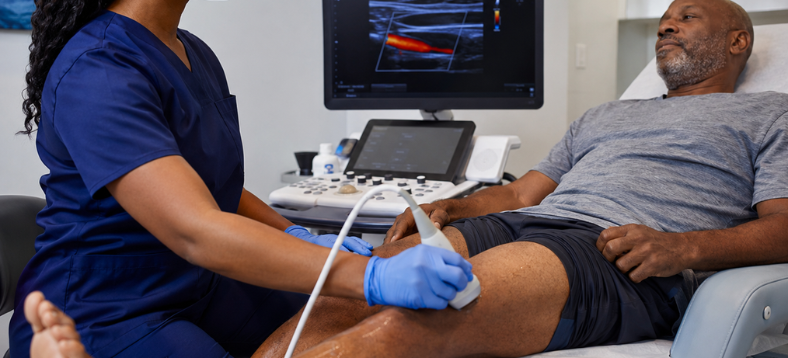
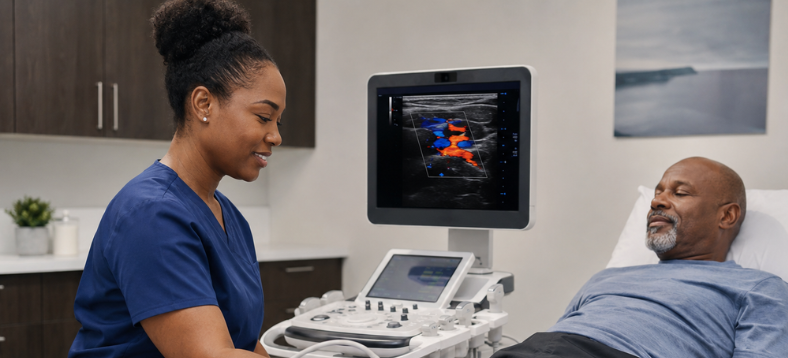
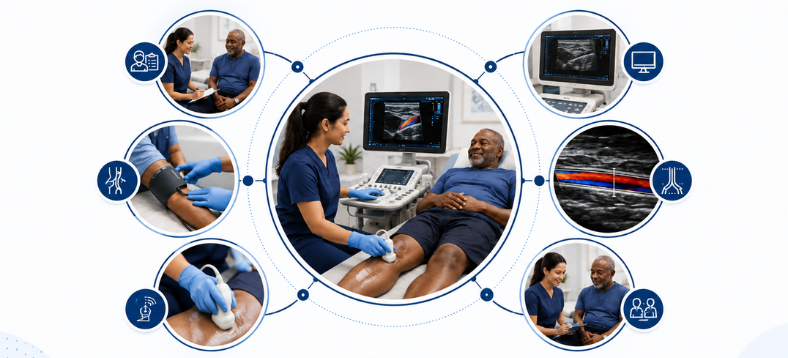
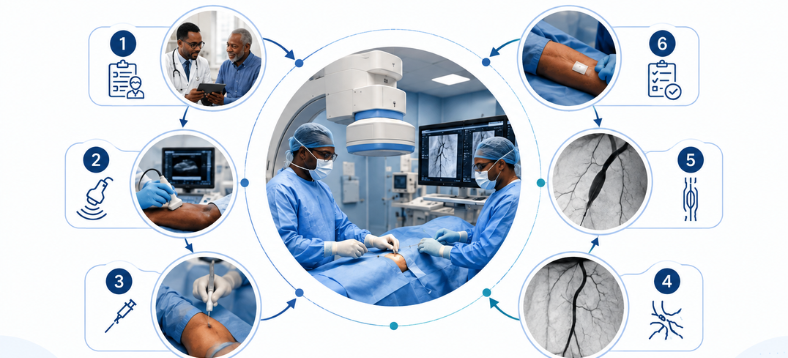
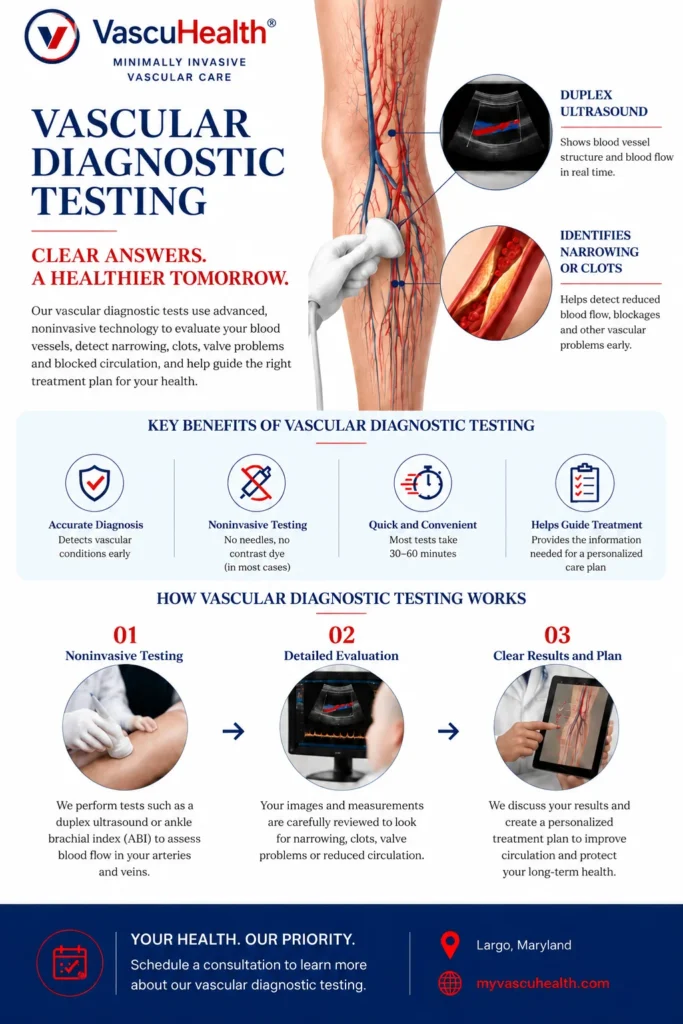
Each of the three vascular diagnostic tests we offer serves a specific purpose. Duplex ultrasound uses sound waves to show both vessel structure and blood flow in real time, identifying narrowing, clots, valve failure and blocked circulation without any needles or contrast dye. Ankle brachial index testing takes blood pressure readings at your ankle and arm and compares them to confirm whether arterial flow to your legs is reduced. Angiography uses live X-ray and contrast dye through a small catheter to produce detailed vessel images when greater precision is needed or when treatment is being planned in the same session. Most tests take 30 to 60 minutes and you go home the same day.
What Happens at Each Stage of Your Vascular Diagnostic Visit
You arrive with a symptom or a question. You leave with a confirmed finding and a plan. Here is what each stage of your visit involves at our clinic.
The VascuHealth Standard for Vascular Diagnostics in Maryland
Reading a duplex ultrasound accurately, knowing when ABI findings need further investigation and integrating angiographic results into a treatment plan takes fellowship-level interventional radiology training. Dr. Nwosu holds ABR board certification in vascular and interventional radiology and maintains active membership in SIR, RSNA, VIVA and OEIS. For patients searching for vascular diagnostics across Maryland, that level of clinical interpretation is available at outpatient level from our clinic with same-week scheduling and no referral required.
What Our Patients Say After Vascular Diagnostic Testing at VascuHealth
Unexplained symptoms, no clear answers and months of uncertainty. Here is what changed after accurate vascular testing at VascuHealth.
Harold Jefferson
Gloria Patterson
Raymond Osei