








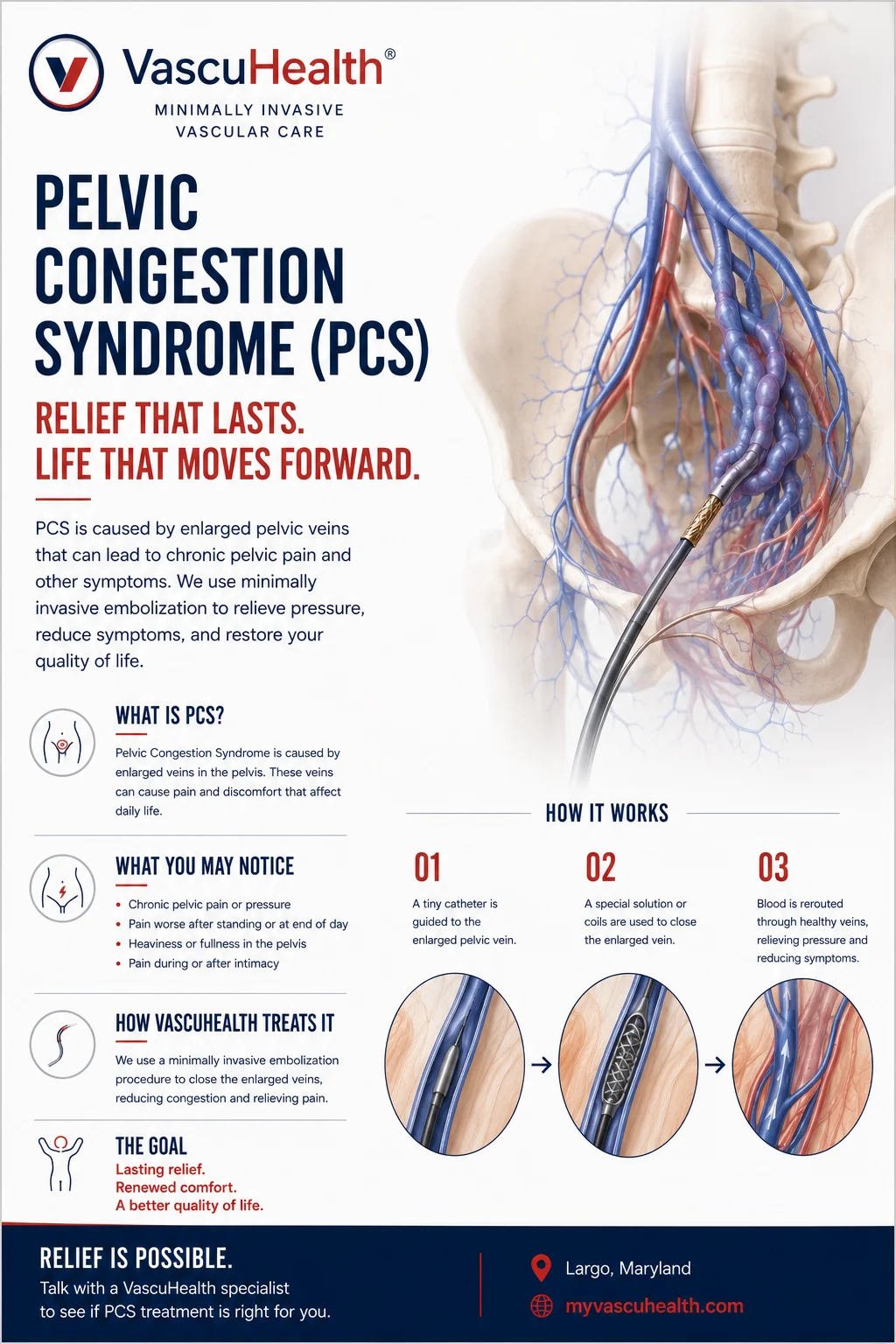
Pelvic Congestion Syndrome Treatment in Maryland

Pelvic congestion syndrome is a chronic pain condition caused by varicose veins inside the pelvis that stop draining properly. Blood pools, pressure builds and most women spend years being told nothing is wrong. At VascuHealth, we perform embolization for pelvic congestion syndrome as a same-day outpatient procedure at our Maryland clinic. No surgery. No hospital stay. You go home the same day.

0 +
Years of Medical Training
0 +
Minimally Invasive Treatments
0 +
Procedures Performed Safely
0 %
Same-Day Outpatient Discharge
WHY VASCUHEALTH

What Our PCS Specialist in Maryland Does Differently

Pelvic Congestion Syndrome is a vascular condition and it takes a vascular specialist to diagnose and treat it correctly. Too many women spend years seeing the wrong type of doctor before getting answers. At VascuHealth, our interventional radiologist has specialized training in PCS treatment. He performs every procedure personally at our clinic and sees you from your very first consultation through your follow-up care. No handoffs. No surprises. Just consistent, expert care from the physician who knows your case.

SYMPTOMS

PCS Symptoms Our Vascular Specialists Treat For Mayland Patients

Pelvic congestion syndrome is consistently misdiagnosed as endometriosis, irritable bowel or pelvic inflammatory disease. If you have been searching for treatment for pelvic congestion syndrome without a clear answer, these are the presentations we see most often at our clinic.

Pain That Has No Clear Explanation

A dull, aching pressure in the lower pelvis that worsens through the day and eases when you lie down is a defining feature of PCS. If your pain has been attributed to everything else without resolution, venous reflux may be the source.

Chronic pelvic pain linked to venous reflux, not stress

Treatment for pelvic congestion syndrome targets the root cause

Pelvic congestion syndrome misdiagnosed for years in most patients

Pelvic congestion syndrome embolization addresses the venous reflux driving your pain

Discomfort Linked to Venous Pressure

Pain during or after intercourse is one of the most underreported symptoms of pelvic congestion syndrome. It is caused by elevated venous pressure in the pelvic floor and does not improve with hormones or pelvic floor therapy when the vein is the root cause.

Intercourse pain caused by elevated pelvic venous pressure

Hormones and pelvic floor therapy do not resolve venous causes

Embolization for pelvic congestion syndrome addresses pressure directly

Pelvic congestion syndrome treatments that go beyond symptom management

Veins That Should Not Be Visible There

Visible varicose veins on the vulva, inner thighs or behind the knees that are unrelated to standard leg vein disease often signal pelvic venous reflux. They indicate elevated pressure that originates deeper in the pelvis.

Vulvar varicosities often signal deeper pelvic venous reflux

Pelvic venous congestion syndrome treatment confirmed through imaging

Elevated pelvic pressure visible in veins standard exams overlook

Embolization for pelvic congestion syndrome closes the source vein

Urgency Without a Urological Cause

Bladder urgency or a persistent sensation of pelvic heaviness that has not responded to urological treatment may be PCS-related compression. Dr. Nwosu reviews your venous anatomy to determine whether the pelvic veins are involved.

Bladder urgency unresolved by urology may be PCS compression

Pelvic heaviness assessed through full venous anatomy review

Pelvic venous congestion syndrome treatment after imaging confirmation

Treatment for pelvic congestion syndrome when urological care has failed

Standing Makes It Worse. Lying Down Helps.

Pelvic discomfort that worsens with prolonged standing and consistently eases when you lie flat is a clear clinical signal for venous pooling. It is one of the first indicators we use when evaluating for pelvic congestion syndrome before imaging confirms it.

Positional pelvic pain is a primary clinical indicator of PCS

Venous pooling worsens with standing and relieves when lying flat

Pelvic congestion syndrome treatments confirmed through targeted imaging

Embolization for pelvic congestion syndrome resolves pooling permanently

Same-Week Appointments Available, No Referral Required

Women across Maryland, Northern Virginia and the Washington, DC metro area come to VascuHealth after years of unanswered pelvic pain. If you need a pelvic congestion syndrome specialist who will review your case and give you a direct answer, we see patients Monday through Friday. Book online or call us directly.

PCS (1)
ABOUT THE PROCEDURE

How We Treat Pelvic Venous Congestion Syndrome

Pelvic venous congestion syndrome treatment works by closing off the veins causing the problem. We access the dilated pelvic veins through a small catheter, map the venous anatomy under live imaging and occlude the veins responsible for the reflux. Blood reroutes through healthy pathways, the pooling resolves and your pain improves. One outpatient session from start to finish.

Emergency Contact
+020.098.456
PROCESS

What to Expect During Your PCS Care at VascuHealth

Every step of your PCS care happens at one clinic, with one physician and a clear plan from the start. Here is what to expect at our clinic.

Your Consultation Diagnostic Imaging Your Procedure Your Recovery Your Results
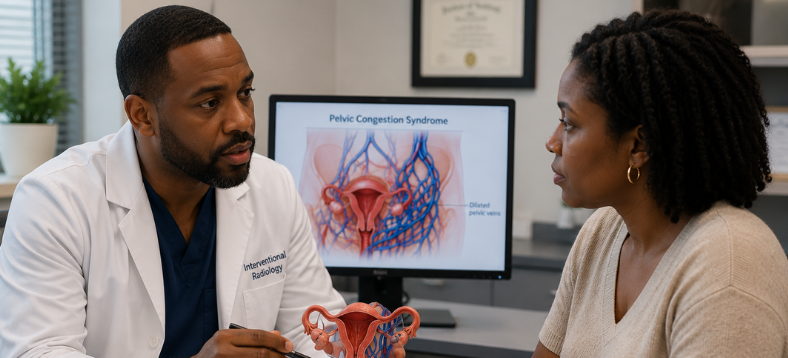
consultation (1)
You Leave With a Diagnosis, Not a Referral
We review your history and any existing imaging in the room and tell you directly what we suspect and why. You leave with a clear next step, not a callback.

Diagnostic Imaging
Confirming the Venous Source
PCS is confirmed through pelvic venography or Doppler ultrasound. We read your imaging with you, explain which veins are involved and tell you whether embolization for pelvic congestion syndrome is the right approach for your anatomy.
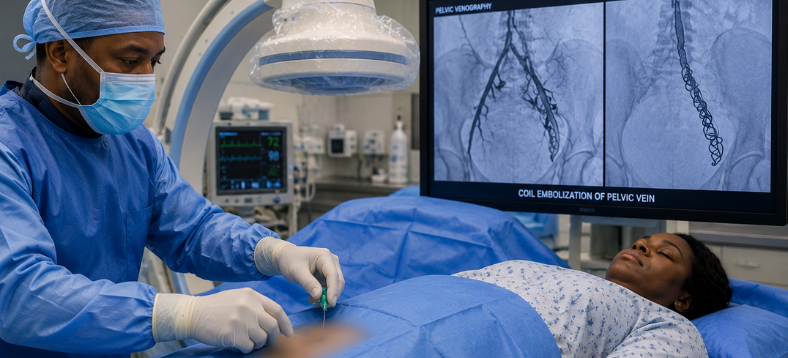
procedure (1)
Specialized Care. One Session.
Our vascular specialist performs your pelvic congestion syndrome embolization personally using a catheter-based approach with no incision, no general anesthesia and no hospital admission. The procedure typically takes sixty to ninety minutes and you go home the same day.
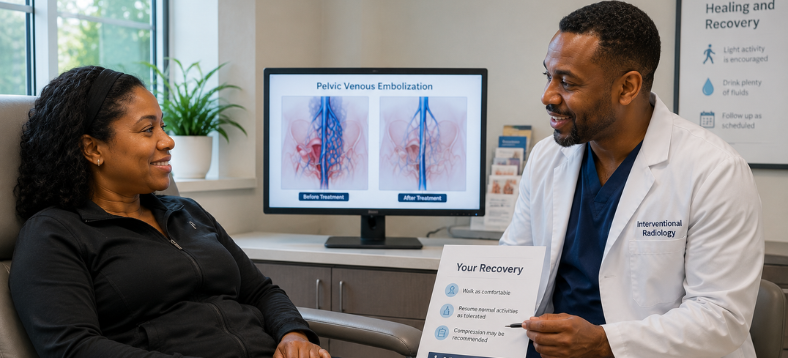
recovery (1)
Back to Your Routine Within Days
Most patients experience mild cramping and fatigue for two to four days. By the end of the first week the majority are moving comfortably and your vascular specialist follows up with you directly before your scheduled review.
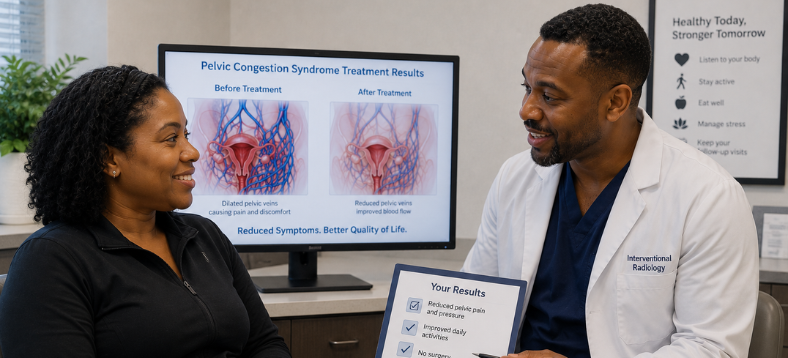
results (1)
Pain Improves. Pressure Lifts.
Pelvic pain typically begins to improve within two to four weeks. Full benefit from pelvic congestion syndrome treatment develops over three to six months and most patients do not require repeat intervention.

CREDENTIALS

PCS Embolization in Maryland From ABR-Certified Vascular Specialist

Dr. Nwosu holds ABR board certification and active membership in SIR, RSNA, VIVA and OEIS, the organizations that set the clinical standard for vascular and interventional medicine in the United States. Identifying and treating pelvic venous congestion syndrome demands imaging expertise and catheter-based procedural skill that sits squarely within interventional radiology. That is the discipline Dr. Nwosu trained in and delivers at our Maryland clinic.

TESTIMONIAL

What Our Patients Say About PCS Treatment at VascuHealth

Women from Maryland and Northern Virginia came to our clinic after years of unexplained pelvic pain and unanswered questions. Here is what happened next.

FAQs

Frequently Asked Questions

Why is PCS so rarely diagnosed?
PCS is caused by internal pelvic varicose veins that standard exams may not evaluate. At VascuHealth, we use specialized pelvic venous imaging to identify these underlying vein issues, helping patients reach a clearer diagnosis even after years of inconclusive results elsewhere.
Can PCS be managed without treatment?
Compression and lifestyle changes help mild cases for a time. When your pain is chronic or getting worse, embolization for pelvic congestion syndrome permanently closes the faulty veins and resolves the cause rather than masking symptoms.
Is the procedure permanent?
Yes. Treated veins are sealed permanently using metallic coils and a sealing agent. We assess your full venous anatomy beforehand to ensure complete treatment for pelvic congestion syndrome.
Will PCS embolization affect my fertility?
Long-term clinical data shows no negative impact on fertility or menstrual cycle. We go through your reproductive history at your consultation before any plan is made.
How do I book with a pelvic congestion syndrome specialist near me in Maryland?
VascuHealth is at 9300 Lottsford Road, Suite 300, Largo, MD 20774, serving Prince George's County, Southern Maryland, Northern Virginia and the Capital Beltway area. Book online or call us Monday through Friday. No referral required.

Visit Our Clinic

Book Appointment

Take the First Step and Book Your Consultation Today

About Us

At Maxcare, we are dedicated to delivering exceptional healthcare with compassion, innovation, and integrity. For over 20 years, we have been a offering comprehensive medical services in USA

Contact Info

231 Utah City Centre, Utah, USA