





Ambulatory Phlebectomy for Varicose Veins in Maryland

Bulging varicose veins that ache through the day and have not responded to compression or prior treatment are not a cosmetic inconvenience. They are a circulatory problem with a direct, proven solution. Ambulatory phlebectomy is the clinical gold standard for removing prominent varicose veins, endorsed by the Society of Interventional Radiology and performed at VascuHealth by us under local anesthetic through punctures no wider than a pencil tip. No stitches. No hospital admission. You go home the same afternoon with the vein gone.

0 +
Years of Medical Training
0 +
Minimally Invasive Treatments
0 +
Procedures Performed Safely
0 %
Same-Day Outpatient Discharge
WHY VASCUHEALTH

Who Performs Your Ambulatory Phlebectomy at Our Clinic?

The outcome of a phlebectomy depends on how accurately veins are marked before anesthetic is applied, how extraction is calibrated as each segment responds and the clinical judgment applied when the vein behaves unexpectedly. Our founding physician earned his medical degree from George Washington University School of Medicine and completed his fellowship at Christiana Care Health System, where he developed advanced expertise in vascular and interventional radiology. We perform every ambulatory phlebectomy personally at our clinic. The physician who reviewed your imaging is the one performing your procedure. No handoffs. No associates.

Is This Right for You?

Five Situations Where Ambulatory Phlebectomy Is the Right Treatment for Varicose Veins

Not every varicose vein needs to be removed. But when a vein has outgrown what other options can reliably handle, phlebectomy is the most direct path to a permanent result. These are the five presentations we treat most often at VascuHealth.

When Your Vein Has Grown Beyond What Injections Can Fix

A varicose vein that has been bulging and hardening for years will not close reliably from an injection. The vein wall has changed too much for sclerotherapy to do its job. Phlebectomy removes it in one visit and the improvement is visible the same day your dressing comes off.

Hardened bulging varicose veins removed in a single outpatient visit

A vein wall that has lost elasticity will not respond to sclerotherapy reliably

Physical removal delivers a result the same day, not weeks after absorption

No stitches, no surgical wound and no recovery period required

Why Vein Size Is Not a Limitation for Phlebectomy

Sclerotherapy becomes unreliable as vessel diameter grows. Phlebectomy operates differently. Veins collapse naturally when drained, which means even a prominently enlarged vessel can be drawn out through openings far smaller than its surface appearance suggests.

Sclerotherapy becomes unreliable as varicose vein diameter increases

Veins collapse naturally when drained allowing large vessels through micro-punctures

Vessel size and suitability confirmed through duplex ultrasound at your first visit

One visit clears what multiple injection sessions cannot reliably achieve

Finishing What Your Ablation Started on the Surface

Ablation closes the deeper vein driving reflux. The surface tributaries it was feeding do not always resolve afterward. When those branches are too prominent for sclerotherapy, phlebectomy removes them in a planned follow-up built from your post-ablation imaging.

Surface tributaries that persist after ablation sit outside its intended treatment scope

Phlebectomy extracts them in a follow-up visit planned from your post-ablation imaging

Staging the two procedures gives a more thorough outcome than ablation alone

Surface clearance confirmed at your follow-up imaging after both stages are complete

When Aching, Heaviness and Cramping Have Gone Unanswered

Legs that ache by midday, cramp at night or show skin changes around the ankle are carrying sustained venous pressure that compression stockings cannot resolve long term. These symptoms respond to removing the vessel generating the pressure, not managing it.

Leg aching that builds through the day signals venous pressure beyond what compression manages

Night cramping caused by pooled venous blood improves once the source vessel is removed

Ankle skin changes stabilise once the damaged vessel feeding that pressure is no longer active

Your symptoms are reviewed and documented at consultation before any plan is confirmed

When Prior Treatment Has Already Failed You Once

Varicose veins return after ablation or sclerotherapy when surface tributaries were not fully addressed the first time. Retreating with the same method produces the same result. Phlebectomy removes the recurrent vessel through a different mechanism, which is why it succeeds where prior treatment did not.

Recurrence after ablation or sclerotherapy usually means surface tributaries were left behind

Retreating with the same method on a returning vein produces the same incomplete result

Phlebectomy works through extraction not chemical reaction giving a genuinely different outcome

Same-week appointments available at our Maryland clinic for returning patients

Book Your Appointment Today!

If your varicose veins have outgrown what other treatments can reliably handle, we assess your full venous anatomy and determine the right path. Patients from Prince George’s County, Southern Maryland, Northern Virginia and the Capital Beltway are seen at our clinic with same-week availability. Book online or call us directly.

How Does Ambulatory Phlebectomy Remove Varicose Veins?
ABOUT THE PROCEDURE

How Does Ambulatory Phlebectomy Remove Varicose Veins?

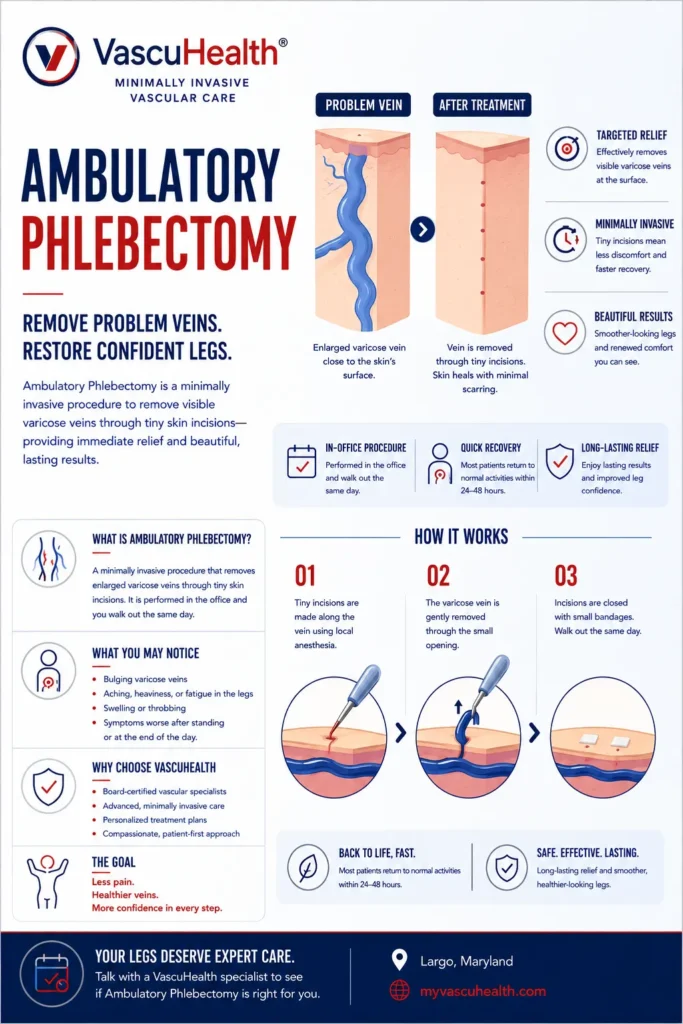
Before any treatment is planned, duplex ultrasound maps your venous anatomy to confirm which vessels require phlebectomy and whether combining it with ablation gives fuller clearance. When the valves inside your leg veins stop working, blood pools, pressure builds and the vein wall stretches into the visible, aching bulge you have been dealing with. Sclerotherapy and ablation close the vein and leave it to absorb. Ambulatory phlebectomy removes it. Your veins are marked while you are standing, local anesthetic is applied, tiny punctures are made beside each marked segment and a fine hook removes the vein in sections. No sutures. A compression dressing is applied and your procedure is complete.

Emergency Contact
+020.098.456
YOUR PROCEDURE AT VASCUHEALTH

What Your Phlebectomy Day Looks Like at VascuHealth

Once booked, you will know exactly what to expect. Here is how your procedure day unfolds at our clinic.

Consultation Preparation Vein Marking The Procedure Recovery and Results
consultation (5)
What Happens at Your First Visit?
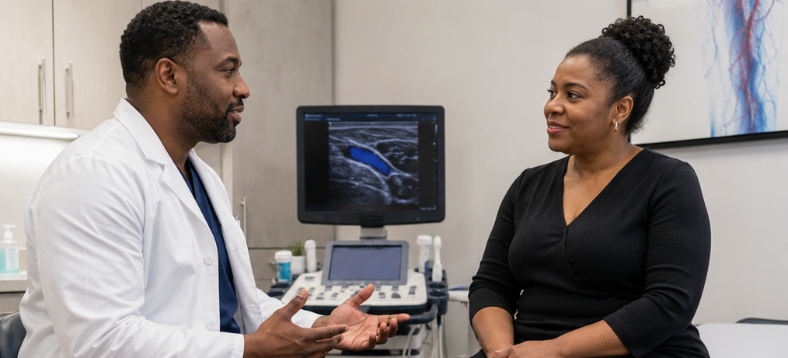
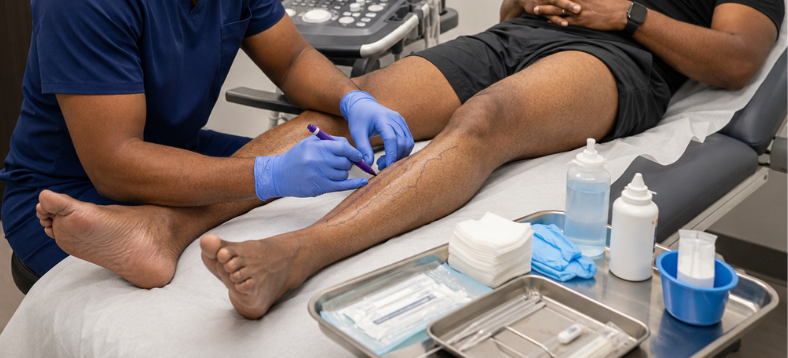
Your vein history is reviewed and your legs are assessed while standing to capture the full distribution of affected vessels. Duplex ultrasound maps your venous anatomy and confirms whether phlebectomy alone resolves your presentation or whether combining it with ablation gives fuller clearance. You leave with a confirmed plan that day.
preparation (2)
How Do You Prepare Before Your Procedure?
Wear loose clothing that rolls above the knee. No fasting and no hospital pre-admission required. If you take blood-thinning medication a short pause may be needed, confirmed at your consultation. Arrange a compression stocking in advance as you will wear one home after your visit.
vein marking
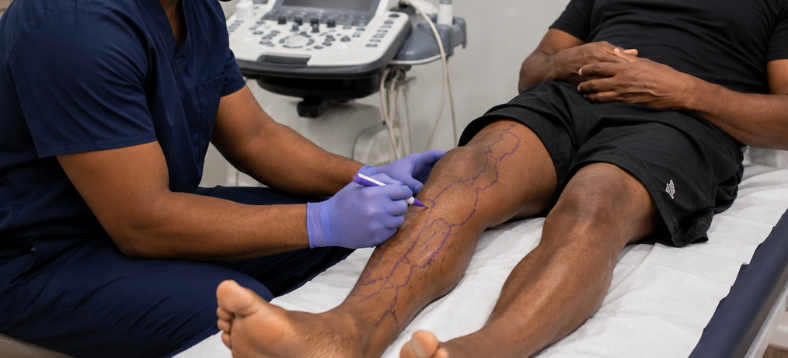
Why Your Veins Are Marked Before You Lie Down
Your varicose veins are most visible when you are standing and blood is filling them under gravitational pressure. Once you lie down that visibility changes significantly. Accurate marking while upright takes around ten minutes and guides every puncture that follows.
PROCEDURE (4)
What Happens When Your Procedure Begins?
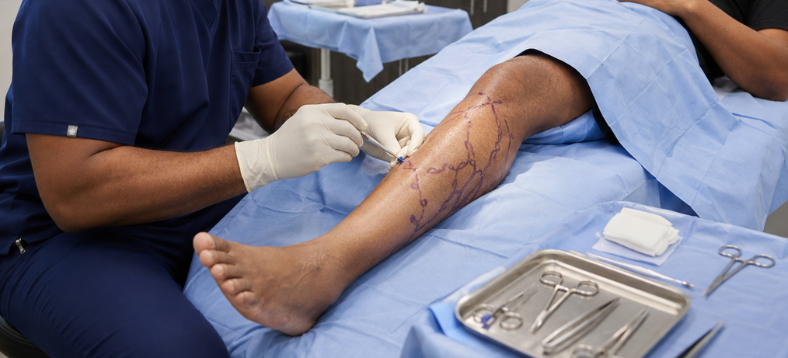
Local anesthetic is applied along each marked segment. Small punctures are made and a surgical hook draws the vein out in sections. You will feel pressure rather than pain. The procedure runs between forty-five and sixty minutes, no stitches are placed and a compression wrap covers the puncture sites when it is done.
RECOVERY (7)
What Do the Days After Your Procedure Look Like?
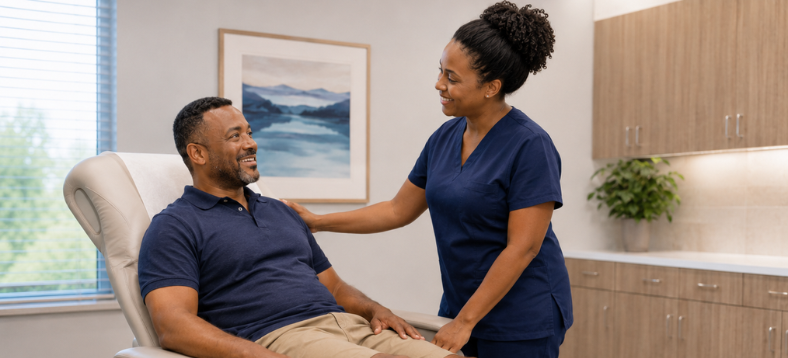
The vein is gone immediately and the visual improvement is visible the same day your dressing comes off. Bruising and mild swelling settles within ten to fourteen days. Your compression stocking supports recovery for one to two weeks and most patients return to desk work within one to two days.

Our Clinical Standard

The Clinical Standard Behind Every Phlebectomy at Our Clinic

Ambulatory phlebectomy performed by a fellowship-trained interventional radiologist is not the standard offering at most vein clinics. It is the standard at VascuHealth. Dr. Nwosu holds ABR board certification in vascular and interventional radiology and active membership in SIR, RSNA, VIVA and OEIS, the bodies that define clinical excellence in vascular medicine. Maryland patients searching for ambulatory phlebectomy near them have direct access to that standard at our outpatient clinic, with the same physician at every stage and no hospital system standing between you and your procedure.

TESTIMONIAL

What Our Maryland Patients Say After Phlebectomy at VascuHealth

Varicose veins that had been there for years. One visit at our clinic. Here is what happened next.

FAQs

Frequently Asked Questions

Is ambulatory phlebectomy painful?
Local anesthetic is applied along every marked segment before any puncture is made, so most patients feel pressure rather than pain throughout. Post-procedure soreness is mild and typically resolves with over-the-counter pain relief within a day or two.
How long does recovery take after phlebectomy?
Most patients return to desk work within one to two days. A compression stocking is worn for one to two weeks, strenuous activity is paused until your follow-up clearance and bruising with localised swelling settles within ten to fourteen days.

Can varicose veins come back after phlebectomy?
The removed vein is gone permanently. New varicose veins can develop from other vessels over time, particularly if underlying venous reflux was not fully addressed. Duplex ultrasound at your consultation maps the complete venous picture so nothing is missed before your plan is confirmed.
Is phlebectomy more effective than sclerotherapy for large varicose veins?
For large, hardened or prominent varicose veins, phlebectomy delivers a more reliable and immediate result in a single visit. Sclerotherapy depends on a chemical reaction that becomes less predictable as vein size increases. Your ultrasound at consultation confirms which approach gives you the best outcome.
Can ambulatory phlebectomy be combined with ablation?
Yes and in many cases it is the right approach. Ablation closes the deeper axial vein and phlebectomy removes the surface tributaries it was feeding. Whether both are done together or staged is determined by your imaging at consultation based on your specific venous anatomy.

Visit Our Clinic

Book Appointment

Take the First Step and Book Your Consultation Today

About Us

At Maxcare, we are dedicated to delivering exceptional healthcare with compassion, innovation, and integrity. For over 20 years, we have been a offering comprehensive medical services in USA

Contact Info

231 Utah City Centre, Utah, USA