





Endovenous Laser Ablation in Maryland

Aching legs, visible varicose veins and heaviness that builds through the day signal that the valves inside your leg veins have stopped working. When valves fail, blood pools instead of draining upward and the vein wall stretches under that pressure. Looking for endovenous laser ablation near you in Maryland? At VascuHealth, we close the faulty vein from the inside using radiofrequency or laser energy through a thin tube. No surgical cuts. No hospital stay. Same-day discharge.

0 +
Years of Medical Training
0 +
Minimally Invasive Treatments
0 +
Procedures Performed Safely
0 %
Same-Day Outpatient Discharge
WHY VASCUHEALTH

Who Performs Your Endovenous Ablation at Our Vascular Practice?

Endovenous ablation is guided by live ultrasound imaging throughout. Accurate catheter placement, correct heat calibration and the choice between RFA and EVLA depend entirely on the physician’s imaging skill and procedural training. Our founding physician earned his medical degree from George Washington University School of Medicine and completed his fellowship at Christiana Care Health System, where he developed advanced expertise in vascular and interventional radiology. Both RFA and EVLA are available at our clinic and the physician who selects your treatment performs it personally. Patients searching for an endovenous laser ablation specialist in Maryland will find that level of training is not standard across general practices.

Two Techniques. One Clinical Standard.

RFA or EVLA, Your Vein Anatomy Decides

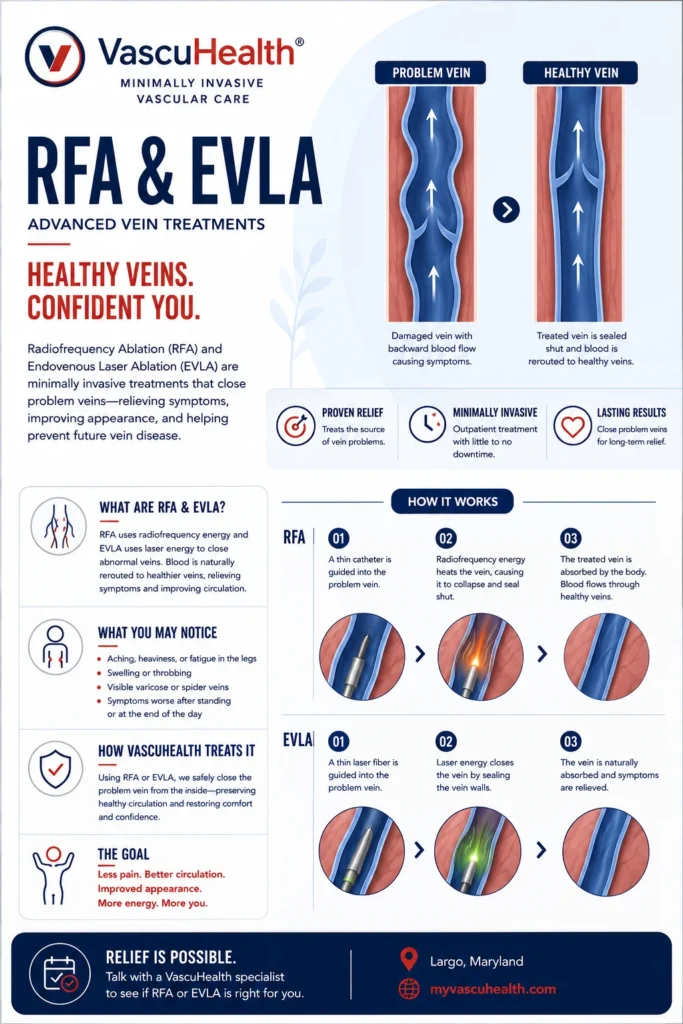
Both radiofrequency ablation and endovenous laser ablation close the faulty vein using heat through a thin tube. Blood reroutes immediately through healthy surrounding veins. The difference is how that heat is generated and which approach suits your anatomy. We map your veins through ultrasound at your first visit and choose based on what we find.

How Does Radiofrequency Ablation Close Varicose Veins?

Radiofrequency ablation heats precise points along the vein wall in short controlled segments. Your vein contracts, seals and is gradually absorbed by your body over the following months. RFA performs best on longer, straighter vein segments with minimal post-procedure soreness.

Consistent temperature applied segment by segment along the vein wall

Best results on longer, straighter veins confirmed through ultrasound mapping

Minimal post-procedure soreness, most patients manage without prescription pain relief

Sealed vein absorbed naturally by your body over several months

Why Does Vein Anatomy Determine Whether EVLA Is Right for You?

Endovenous laser ablation delivers laser energy through a fine wire inside the catheter. As it withdraws, the heat collapses and seals the vein wall progressively. EVLA suits veins that wind, branch or follow irregular paths where flexibility gives better wall contact throughout.

Laser energy delivered through a fine wire for precise, adaptable heat application

Suited for irregular, winding or branching vein anatomy

Reaches vein segments that fixed-segment approaches cannot contact consistently

Same recovery timeline and same-day discharge as RFA

One Session. Permanently Closed. Home the Same Afternoon.

Whether your anatomy calls for RFA or EVLA, your care at VascuHealth follows the same path. Ablation is performed under local anesthetic with continuous ultrasound guidance. You leave the same afternoon wearing a compression stocking. Clinical studies report success above 95 percent for both techniques at five-year follow-up.

Performed under local anesthetic, no general anesthetic or sedation involved

Completed in thirty to sixty minutes at our practice

Ultrasound confirms full vein closure before the catheter is removed

You leave the same day with a compression stocking and written aftercare instructions

When Should Ablation and Sclerotherapy Be Combined?

Endovenous ablation targets the main faulty vein driving your symptoms. Where smaller surface clusters need attention, we combine ablation with sclerotherapy in the same session. The plan is built from your ultrasound findings, designed around your anatomy.

Ablation permanently closes the primary vein causing your symptoms

Sclerotherapy clears smaller surface clusters through a targeted injection

Prominent bulging surface veins not suitable for injection are removed through ambulatory phlebectomy in the same visit

Treatment plan built from your ultrasound findings, designed around your anatomy

How Do We Know If You Are Ready for Endovenous Ablation?

Not every varicose vein presentation requires ablation. We confirm candidacy through duplex ultrasound showing blood flowing the wrong direction before recommending any procedure. If symptoms limit your daily activity and compression is no longer controlling them, ablation is the right next step.

Duplex ultrasound confirms reversed blood flow before any procedure is planned

Symptoms limiting daily activity are a key clinical criterion for treatment

Conservative options discussed first where appropriate for your presentation

You leave your first visit with a clear answer, not a follow-up appointment to wait on

Same-Week Appointments Available for Endovenous Ablation in Maryland

If your legs are aching, swollen or your veins are visibly progressing, book a consultation at VascuHealth. We assess your veins, confirm candidacy and have a clear plan before you leave. Book your free consultation today.

Varicose Veins Worsen Over Time. Endovenous Ablation Stops That.
WHAT HAPPENS WHEN VARICOSE VEINS GO UNTREATED

Varicose Veins Worsen Over Time. Endovenous Ablation Stops That.

Before any treatment is selected, duplex ultrasound maps your veins to identify which vessels are incompetent and whether ablation, sclerotherapy or phlebectomy is the most appropriate approach for your presentation. Varicose veins form when leg vein valves weaken, allowing blood to fall backward and pool. Left untreated, this moves from visible discomfort toward skin hardening, venous eczema and open leg ulcers. Endovenous ablation closes the faulty vein at the source before that progression takes hold.

Your Procedure Day at VascuHealth

How Does Your Endovenous Ablation Process Look Like at VascuHealth?

Once booked, you will know exactly what to expect. Here is how your procedure day unfolds at our clinic.

You Arrive Vein Mapping Local Anesthetic Vein Closure Same-Day Discharge

arrive
How Your Ablation Day Starts at VascuHealth
You arrive at your scheduled time with no hospital pre-admission and no overnight preparation. Wear loose clothing that rolls above the knee. Your full visit typically runs two to three hours.
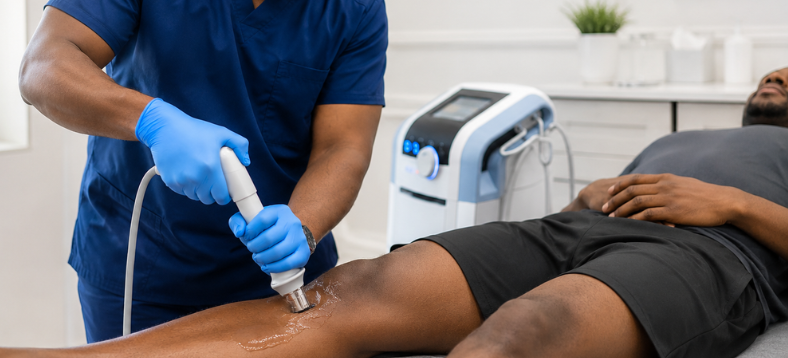
Vein Mapping
Why Do We Map Your Veins Before Placing the Catheter?
We scan your leg to confirm the exact vein route, measure its diameter and mark the entry point. This takes around fifteen minutes and is painless. The precision of your ablation depends directly on this step.
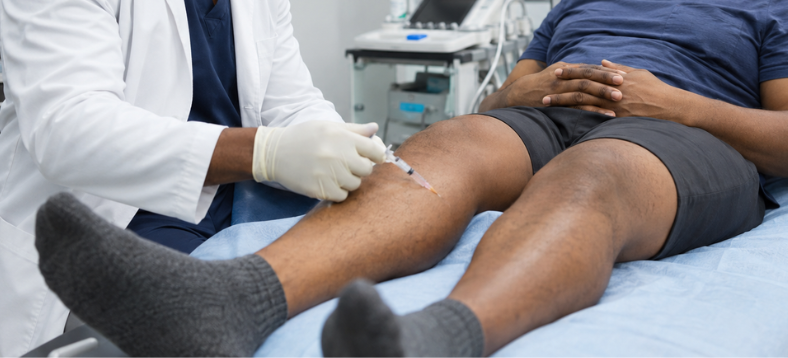
local anesthetic
Numbing the Full Vein Length Before RFA or EVLA Begins
We deliver a numbing solution along the full vein length to protect surrounding tissue and keep you comfortable. The catheter is placed under continuous ultrasound guidance. You remain awake and comfortable throughout.
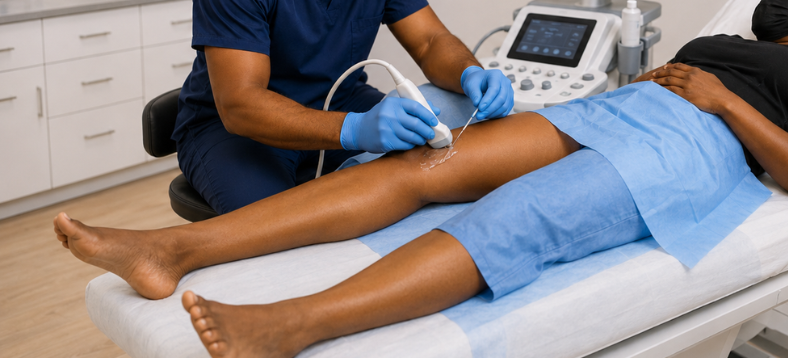
vein closure
How We Seal Your Vein During Endovenous Ablation
We activate the energy source and withdraw it steadily through your vein. The wall seals as the catheter travels. Ultrasound confirms complete closure before the catheter is removed and a small dressing covers the entry point.

discharge
What Happens After Your Endovenous Ablation at VascuHealth?
You rest briefly in our recovery area. Our team fits your compression stocking, reviews aftercare and clears you to leave. Most patients return to desk work within one to two days and full activity within one week.

Vascular Training That Meets Clinical Standards

The Clinical Standard Behind Every Ablation at Our Clinic

Accurate ultrasound interpretation, precise catheter technique and sound clinical judgment between RFA and EVLA are the foundation of fellowship-trained interventional radiology. Our physician holds ABR board certification and active membership in SIR, RSNA, VIVA and OEIS. Maryland patients searching for an endovenous laser ablation specialist have direct access to that standard at our clinic, with the same physician from first scan through follow-up.

TESTIMONIAL

What Our Patients Say After Endovenous Ablation at VascuHealth

Aching legs for years. One afternoon at our clinic. Here is what changed.

FAQs

Frequently Asked Questions

How is endovenous ablation different from varicose vein surgery?
Surgery removes the vein through skin incisions while endovenous ablation closes it from the inside using heat through a thin tube, no cuts, no hospital admission, same-day discharge with comparable outcomes and substantially shorter recovery.
Can both legs be treated at the same visit?
In selected cases yes, we review your ultrasound at consultation and confirm whether both sides qualify based on your anatomy and overall health, not convenience.
How long before I see results after endovenous ablation?
The treated vein begins closing immediately with visible surface changes and symptom improvement developing over four to six weeks as the closed vein is absorbed.
Does insurance cover RFA and EVLA in Maryland?
Medicare, Medicaid and most major plans cover both procedures when venous insufficiency is confirmed through ultrasound and symptoms are documented, contact our clinic to verify your benefits before your first visit.
Where is VascuHealth located in Maryland?
VascuHealth is at 9300 Lottsford Road, Suite 300, Largo, MD 20774, serving Northern Virginia and Southern Maryland, Monday through Friday 8:00am to 5:00pm, book at VascuHealth.

Visit Our Clinic

Book Appointment

Take the First Step and Book Your Consultation Today

About Us

At Maxcare, we are dedicated to delivering exceptional healthcare with compassion, innovation, and integrity. For over 20 years, we have been a offering comprehensive medical services in USA

Contact Info

231 Utah City Centre, Utah, USA