


Peripheral Artery Disease (PAD) Treatment in Maryland

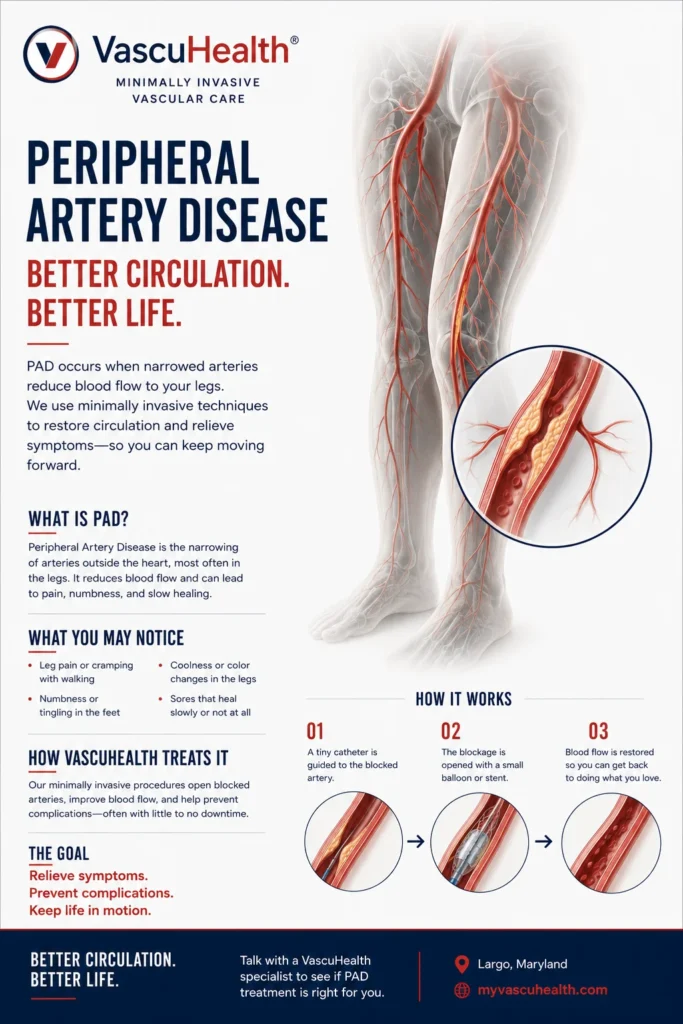
Peripheral artery disease (PAD) occurs when fatty plaque gradually builds up inside the arteries that supply blood to your legs and feet, narrowing them and reducing the oxygen and nutrients your muscles and tissues need to stay healthy. Many patients first notice leg pain or cramping while walking, feet that feel cold or numb, slow-healing wounds, or changes in skin color. Left untreated, PAD can significantly impact mobility, quality of life, and overall vascular health.


At VascuHealth, we diagnose and treat PAD using advanced, minimally invasive techniques that restore circulation and help patients get back to living active lives. Using state-of-the-art imaging technology, we identifies the exact location of blocked or narrowed arteries and develop a personalized treatment plan to improve blood flow, performed through a tiny catheter inserted through the skin, avoiding the need for open surgery.

0 +
Years of Medical Training
0 +
Minimally Invasive Treatments
0 +
Procedures Performed Safely
0 %
Same-Day Outpatient Discharge
WHY VASCUHEALTH

Why Fellowship-Trained Interventional Radiology Is the Right Standard for PAD Care

Bypass surgery has its place, but it means general anesthesia, inpatient admission and weeks of recovery. For most PAD patients, catheter-based treatment is the more appropriate path. Our interventional radiologist earned his medical degree from George Washington University School of Medicine and completed his fellowship at Christiana Care Health System, where he developed advanced expertise in angioplasty, stenting and atherectomy. He built VascuHealth so Maryland patients have direct access to that standard of care without traveling to a major hospital system. Every PAD case is his personally, from evaluation through follow-up.

SYMPTOMS

Five Conditions That Put You at Higher Risk for Peripheral Artery Disease

PAD follows years of specific, identifiable conditions that accelerate plaque buildup inside your arteries. If any of the five below apply to you and your legs have been troubling you on walks, a vascular evaluation is the right next step.

Diabetes and Arterial Narrowing

Diabetes damages artery walls and accelerates plaque buildup. People with diabetes develop PAD at four times the normal rate. Nerve damage often hides early symptoms until narrowing is already serious.

High blood sugar stiffens and narrows artery walls over time

Neuropathy masks pain, delaying diagnosis until damage is advanced

Risk is four times higher than average, rising with disease duration

Poor blood sugar control speeds plaque formation faster than most risk factors

Smoking and Vascular Risk

Tobacco damages artery walls and pushes PAD onset nearly a decade earlier in smokers. Quitting slows further damage but does not reverse existing deposits. Leg symptoms in any former smoker still need proper evaluation.

Nicotine constricts arteries and cuts oxygen delivery to the legs

Tobacco chemicals damage the inner artery lining, attracting plaque

Smokers develop PAD nearly a decade earlier than non-smokers

Former smokers still carry elevated risk and need proper evaluation

Hypertension and Artery Wall Damage

Chronic high blood pressure stiffens artery walls over time, making plaque buildup more likely. Combined with cholesterol or diabetes, progression moves faster. Recent leg trouble alongside long-managed hypertension is worth connecting.

Sustained pressure causes artery wall damage that invites plaque buildup

Stiffened arteries deliver less blood to the legs during activity

Combined with diabetes or high cholesterol, progression accelerates sharply

Medication controls pressure but cannot remove existing arterial deposits

High Cholesterol and Plaque Buildup

LDL cholesterol deposits on artery walls and calcifies silently for years before symptoms appear. Medication slows new buildup but cannot reopen an already narrowed artery. Painful walking usually means blockage has been building for a long time.

LDL embeds in artery walls and calcifies silently over years

Symptoms often don't appear until blockage exceeds 60 percent

Statins slow new buildup but cannot reopen already narrowed arteries

Calf or thigh pain on walking is a direct sign of arterial narrowing

Age and Increasing PAD Risk

Arteries stiffen naturally with age and PAD becomes significantly more common after 50. Cold feet, reduced walking tolerance and leg heaviness are frequently dismissed as aging rather than treated as circulatory warning signs worth evaluating.

Decades of pressure and inflammation push arteries past a clinical threshold

PAD affects roughly one in five people over 70

Cold feet and aching legs are often mistaken for normal aging

Any additional risk factor after 50 justifies proactive vascular screening

Searching for Peripheral Artery Disease Treatment Near You in Maryland? No Referral Required.

Leg pain during activity, persistent cold feet or a wound that will not respond are worth addressing directly. You do not need a referral. Book your consultation with us. Same-week appointments are available.

PAD Is Not Just a Leg Problem, It Is a Whole-Body Vascular Warning
ABOUT THE PROCEDURE

PAD Is Not Just a Leg Problem, It Is a Whole-Body Vascular Warning

Most patients search for peripheral artery disease treatment when leg pain finally prompts them to act. What many are never told is that PAD affects more than 8.5 million Americans and shares its root cause with conditions that raise heart attack and stroke risk. The arterial hardening narrowing your leg vessels is happening elsewhere in your body too. We evaluate your full vascular picture, not just the segment causing your current symptoms.

PROCESS

From Initial Diagnosis to Full Recovery: Your Care Pathway With VascuHealth

From your first appointment to post-procedure follow-up, we manage every stage directly at our practice. No transfers, no handoffs between providers.

Diagnosis Angioplasty Stenting Atherectomy Recovery
diagnosis
ABI Test and Same-Day Diagnosis
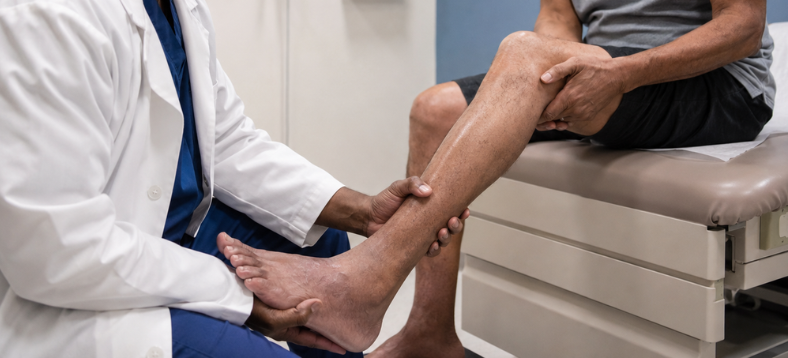
We measure arterial flow to your legs using an ankle-brachial index test, comparing blood pressure at your ankle and arm. A lower ankle result confirms restricted circulation. An ultrasound then shows where the blockage sits and how far it extends. Both tests are non-invasive and painless. You leave the same visit with a confirmed diagnosis and a clear treatment plan in hand.
angioplasty
Balloon Angioplasty for Blocked Arteries
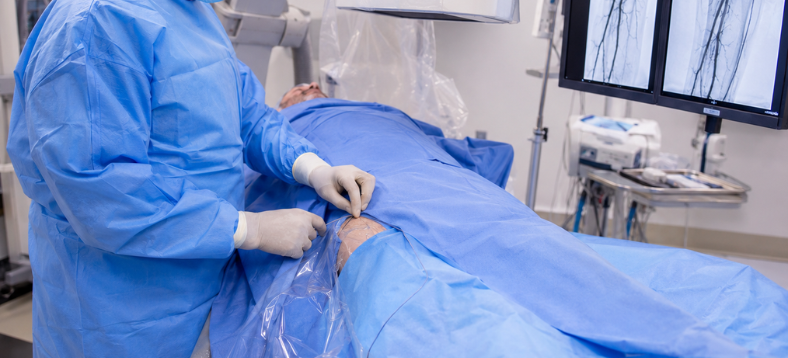
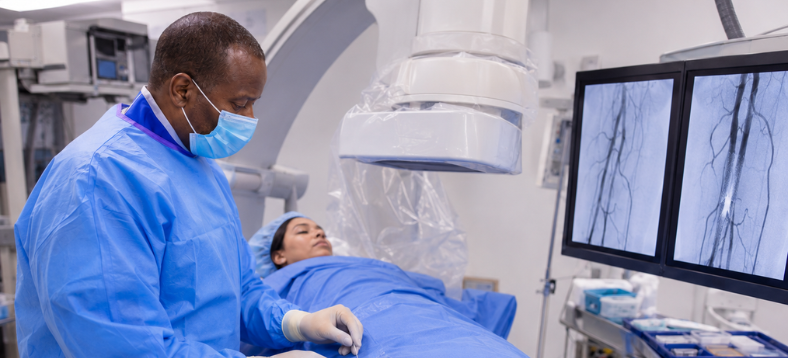
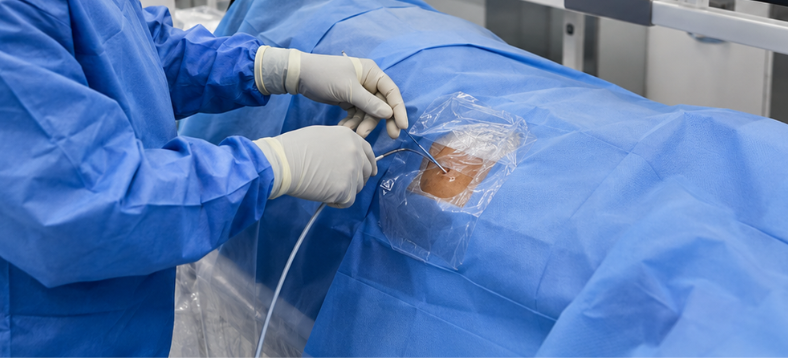
A catheter is guided to the narrowed artery through a small access point at your groin or wrist. A balloon at the tip inflates at the blockage, pushing plaque outward against the artery wall and opening the vessel channel. Once we confirm blood flow through the segment is restored, the balloon deflates and the catheter is removed. No surgical incision required.
stenting
Stenting for Long-Term Vessel Patency
When an artery recoils after balloon treatment or carries a blockage too extensive to hold open through angioplasty alone, a metal mesh stent is placed inside the treated segment. The mesh holds the vessel wall open permanently. No removal is needed and no further intervention is required at that site.
Atherectomy
Atherectomy for Calcified Blockages
Heavily calcified plaque does not respond well to balloon compression. Atherectomy removes the material directly using a rotating tool at the catheter tip, clearing the buildup from the artery wall and restoring a clean channel. When blockages are mixed in composition, atherectomy is performed first within the same session.

recovery (4)
Same-Day Discharge and Recovery
You rest briefly at our facility after the procedure before going home. The access point may be tender for a day, which is normal and easily managed. Walking is encouraged the same afternoon. Most patients return to light daily activity within one to two days and notice a clear improvement in leg comfort as circulation through the treated segment is restored.

CREDENTIALS

Peripheral Artery Disease Doctor in Maryland

Treating PAD well requires accurate vascular imaging interpretation, sound judgment on procedure selection and skilled catheter navigation through diseased vessels. Dr. Nwosu trained in exactly this discipline at fellowship level and holds ABR board certification in vascular and interventional radiology. His active membership in SIR, RSNA, VIVA and OEIS reflects a standard he maintains in ongoing practice, not a credential earned once and set aside. As a peripheral artery disease specialist serving Maryland and the Capital Beltway region, he provides that level of care at a community-based outpatient practice. No hospital system to navigate. No referral chain between you and the physician performing your procedure.

TESTIMONIAL

What Our Patients Say After PAD Treatment at VascuHealth

Patients from across Maryland came to us unable to walk a block without stopping. Here is what changed.

FAQs

Frequently Asked Questions

How do I know if my leg pain is PAD and not another condition?
PAD produces pain that comes on during walking and clears within minutes of stopping. Pain that stays at rest or sits around a joint usually points elsewhere. An ankle-brachial index test at our practice gives you a confirmed answer the same day, with your results reviewed by us before you leave.
Do I need bypass surgery to treat PAD?
Most patients do not. Angioplasty, stenting and atherectomy each treat the blocked artery through a catheter, without open surgery or general anesthesia. Bypass is considered only when arterial anatomy makes catheter access impractical and our physician will tell you clearly if that applies to your case.
How quickly will symptoms improve after treatment?
Most patients notice a real improvement in leg comfort within the first several days as circulation is restored. Walking tolerance increases as blood supply to the limb improves. Non-healing foot wounds typically begin responding within two to four weeks of restored blood flow.
Is PAD treatment covered by insurance?
Yes. PAD procedures are covered under Medicare, Medicaid and most major private plans when the diagnosis is documented. Contact our office before your first appointment and we will confirm your coverage in advance.
Where can I find peripheral artery disease treatment near me in Maryland?
If you are searching for peripheral artery disease treatment, VascuHealth is at 9300 Lottsford Road, Suite 300, Largo, MD 20774. We serve patients across Maryland, Northern Virginia and the Capital Beltway region. Same-week appointments available at VascuHealth. No referral required.

Visit Our Clinic

Book Appointment

Take the First Step and Book Your Consultation Today

About Us

At Maxcare, we are dedicated to delivering exceptional healthcare with compassion, innovation, and integrity. For over 20 years, we have been a offering comprehensive medical services in USA

Contact Info

231 Utah City Centre, Utah, USA